





The DNA of the parks
An island of stone in an ocean of olive trees.
Unlike a National Park whose heart is a sanctuary without inhabitants, a Regional Natural Park is an inhabited territory. It's a bold challenge launched more than 50 years ago: to prove that we can live, work and develop the economy while protecting nature. It is the constant search for a fragile but vital balance.


From a utopia to a model of society

The spark of Lurs
It all starts with a reflection by the Department of Territorial Planning and Regional Action (DATAR) How to protect while allowing territories to develop? In Lurs-en-Provence, thinkers are proposing a “new form of land use planning”: regional natural parks

The birth certificate under the signature of General de Gaulle
General de Gaulle signed the first decree which contained the founding principles and the first regulations for regional natural parks on March 1, 1967. The PNRs were born. A French exception envied throughout the world.

A recognized territorial model
Regional natural parks have become an essential protection and development tool in rural areas with exceptional heritage.
What was an experiment has become one of the largest networks for the protection of natural and cultural heritage in France.
The 5 major missions of the Parks (daily)

Protect
Preserve the natural, cultural and landscape heritage.

Arrange
Supporting urban planning that contributes to the quality of life and the vitality of territories

Develop
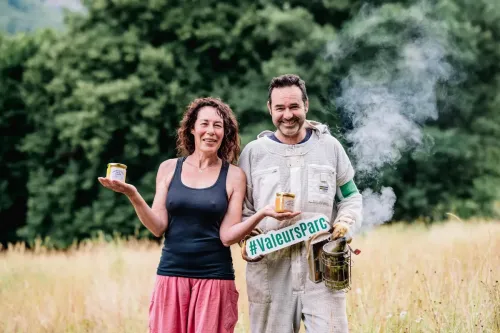
Support a local, sustainable and social economy (tourism, crafts, etc.)

Educate and welcome
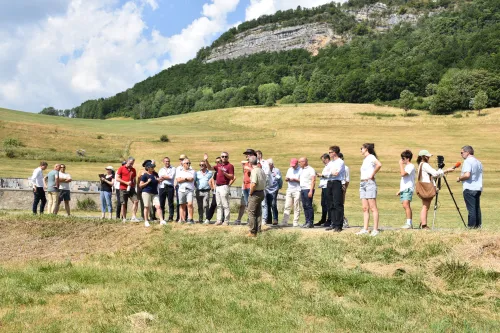
Raise awareness among visitors, schools and residents of the challenges of the territory

Experiment
Contribute to research programs, be a laboratory for accelerating the ecological transition
The classification of a Regional Natural Park: a collective and demanding challenge
A classification to be renewed every 15 years
Classification as a Regional Natural Park meets demanding criteria:
- The heritage and landscapes constituting the identity of the territory must be remarkable and threatened
- The perimeter of the Park must be coherent with regard to its heritage and landscapes.
- The charter must propose a quality development and preservation project for the territory
- Local authorities must be particularly mobilized and involved
This classification must be renewed every 15 years and is subject to an evaluation to monitor compliance with its criteria.
The Charter, a document which commits
The charter of a Park has recognized legal value. It sets objectives to achieve and measures to achieve them. The charter is implemented by the signatory communities: municipalities, EPCIs, Departments, Regions and the State.
Shared governance
It is a mixed union where Municipalities, Intermunicipalities, Departments and Regions decide together on the future of the territory. They are supported by a team of multidisciplinary experts.
Actors committed to a common future

The Territorial Parliament

The technical team

Civil society
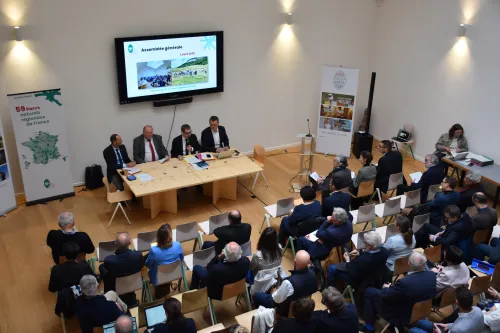
The strength of the Park is to bring around the same table those who make up and bring life to the territory: the farmer and the naturalist, the elected official and the resident.

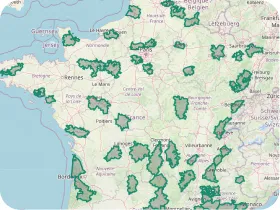
A national force
From French territory
From French territory
Regional natural parks